Photos from the tour
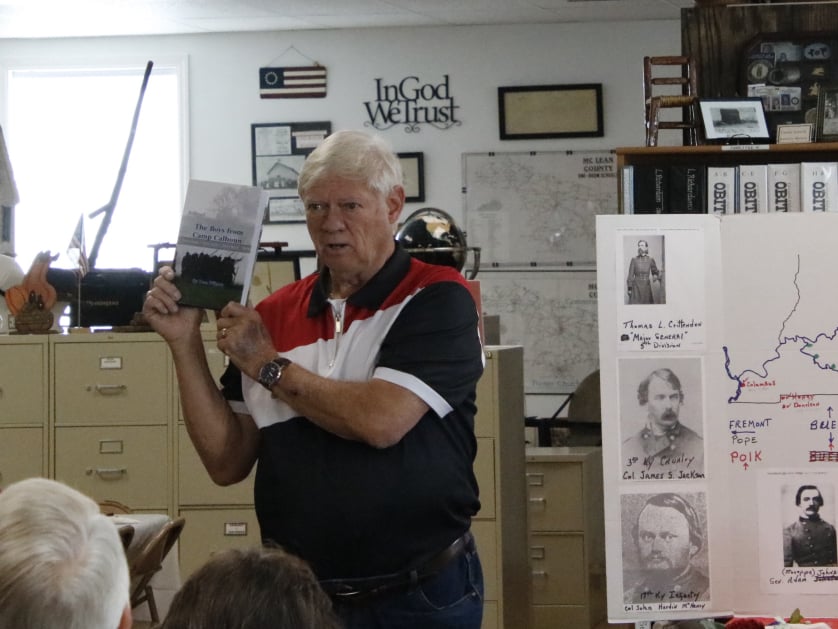
Harold Wilson introducing the book to folks gathered at the museum - the starting point for the tour.
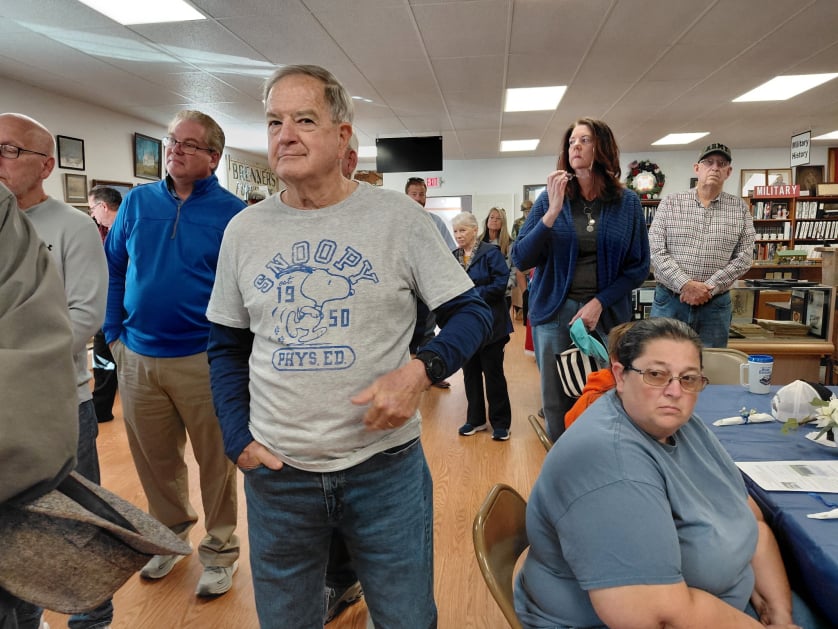
A surprisingly large turnout. Friend, Mike Roberts was visiting the museum for the first time.
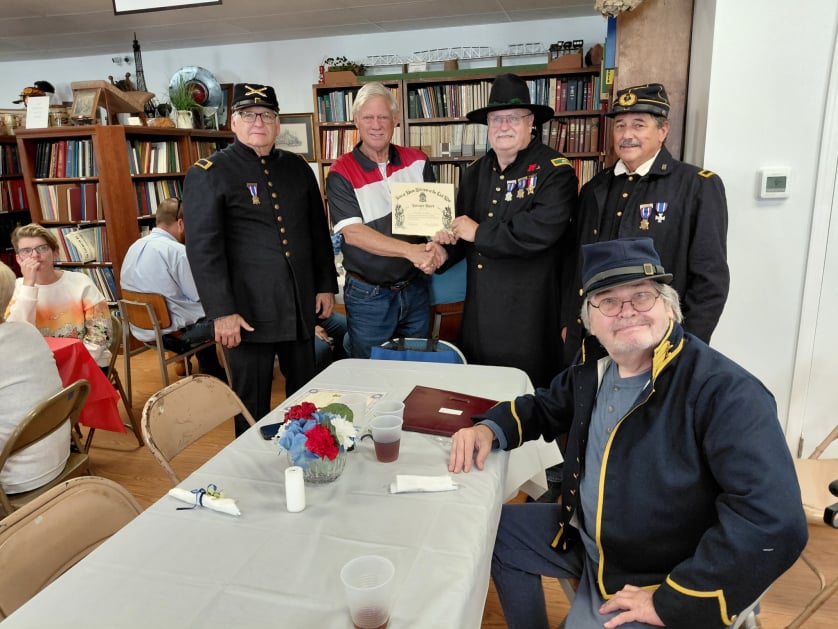
Harold Wilson is given a Patriotic Award by The Sons of the Union Veterans.
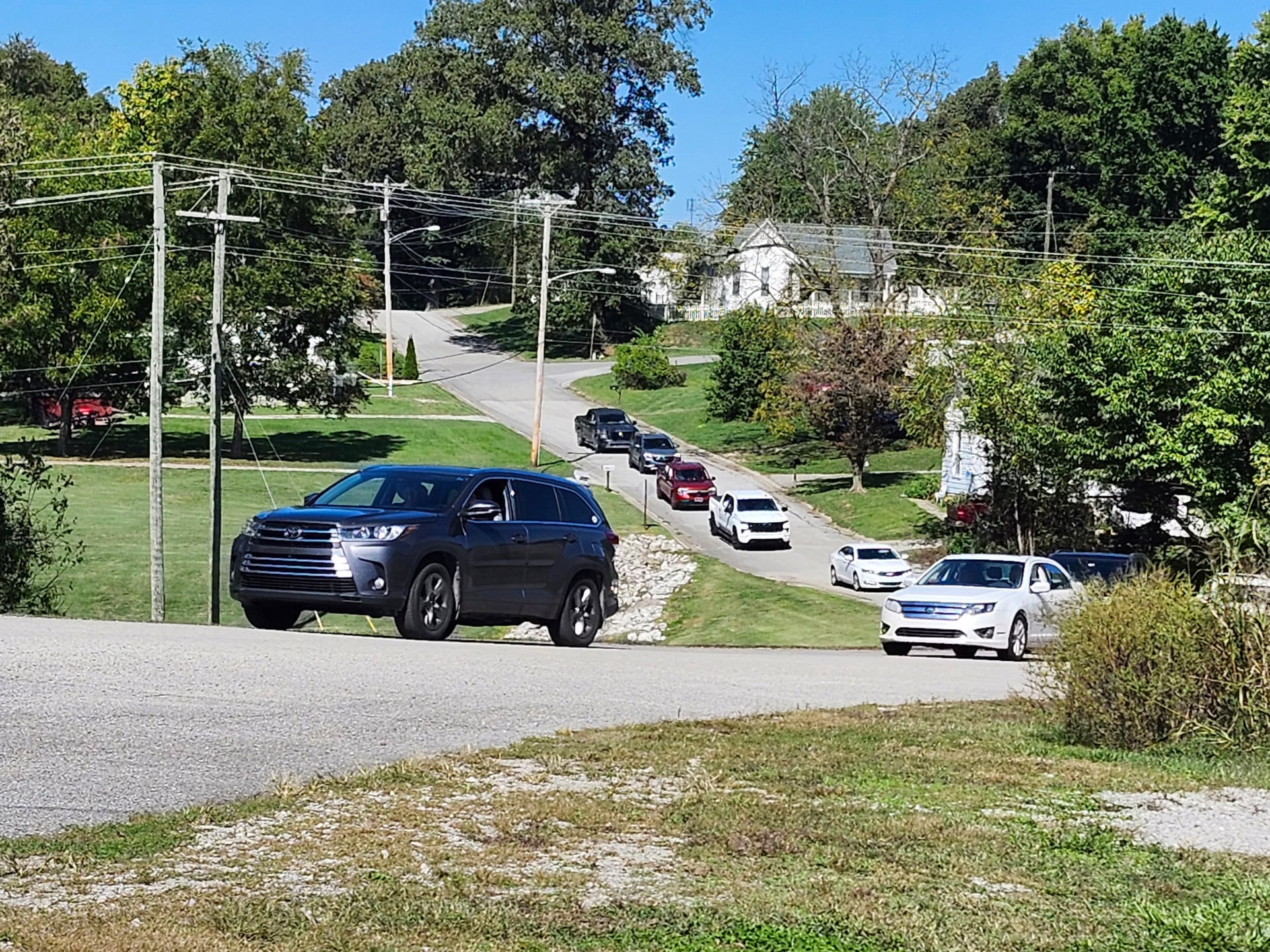
Cars head out from the museum. It was encouraged to share cars as it was a lot of traffic for the small town.
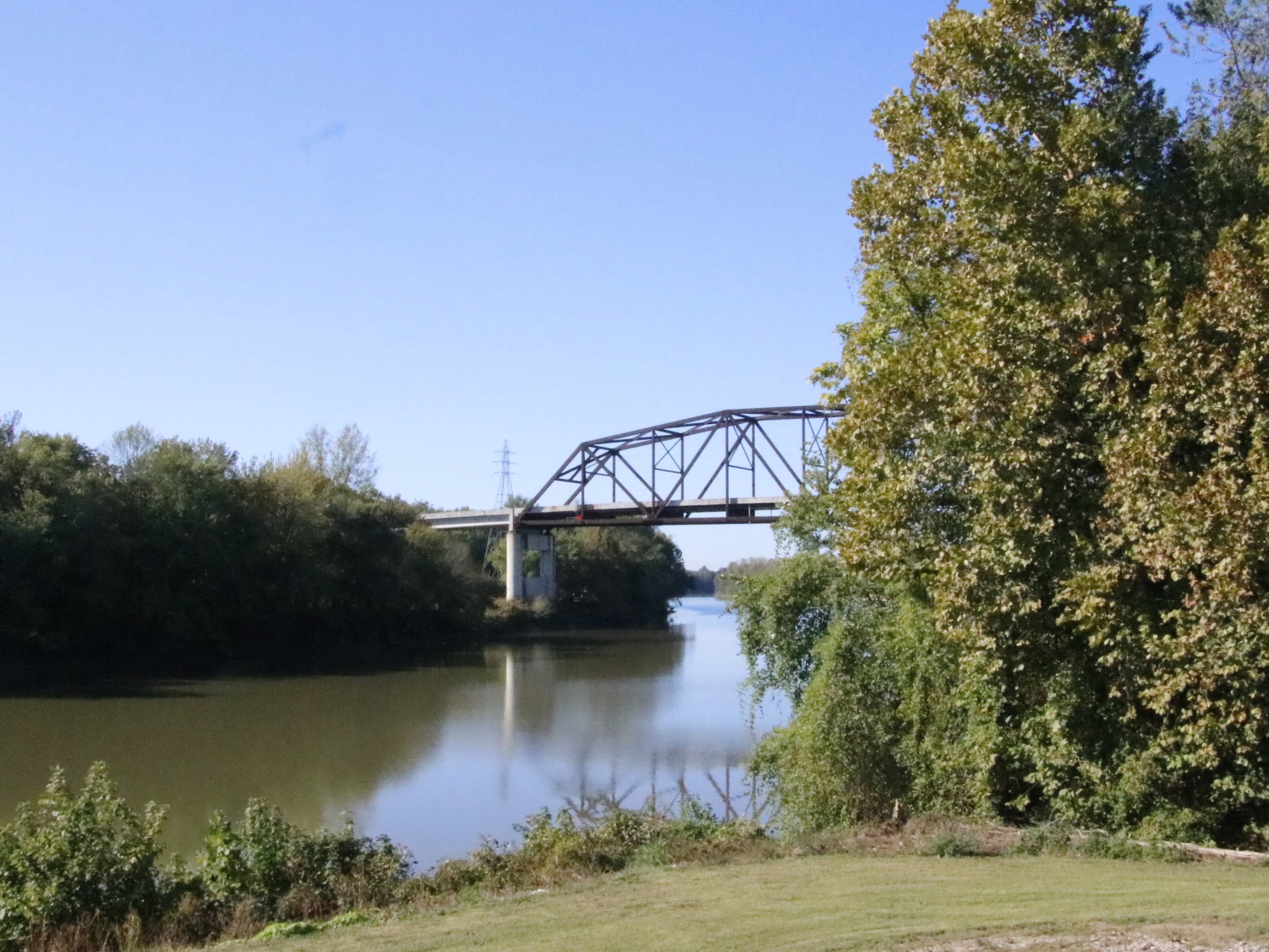
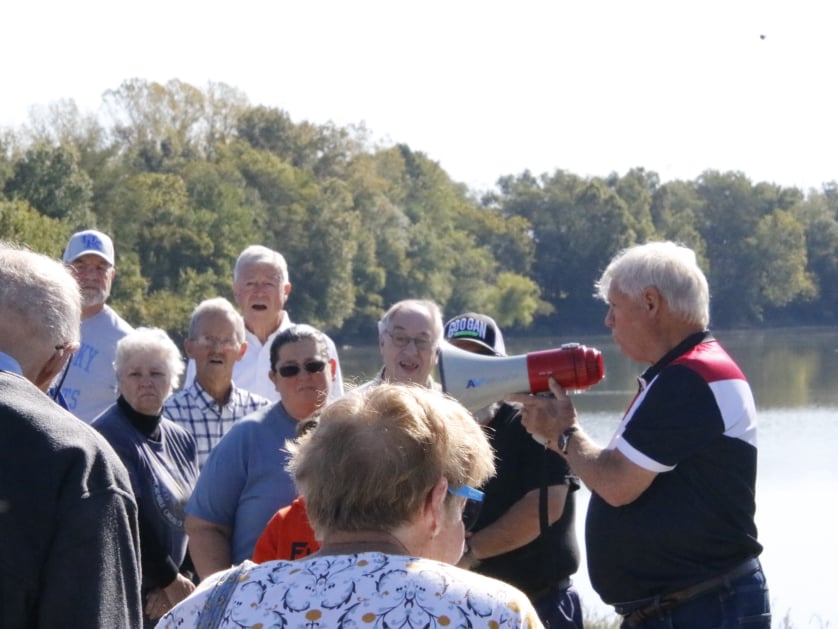
Tour Stop #1 along the Green River. Controlling access to the Green River and it's major tributary, the Big Barren, was vital. Navigable from Bowling Green to the Ohio River, the rivers formed an important trade route. Although the tour was in honor of the Civil War book, Wilson mixed in the history of the area. Everyone gathered around to hear about early Calhoun.
Navigable from Bowling Green to the Ohio River, the rivers formed an important trade route. When the Confederates seized Lock No. 3 at Rochester soon after occupying Bowling Green, Union forces rushed to secure the remaining locks. The Green River became the dividing line between Union and Confederate forces in Kentucky.
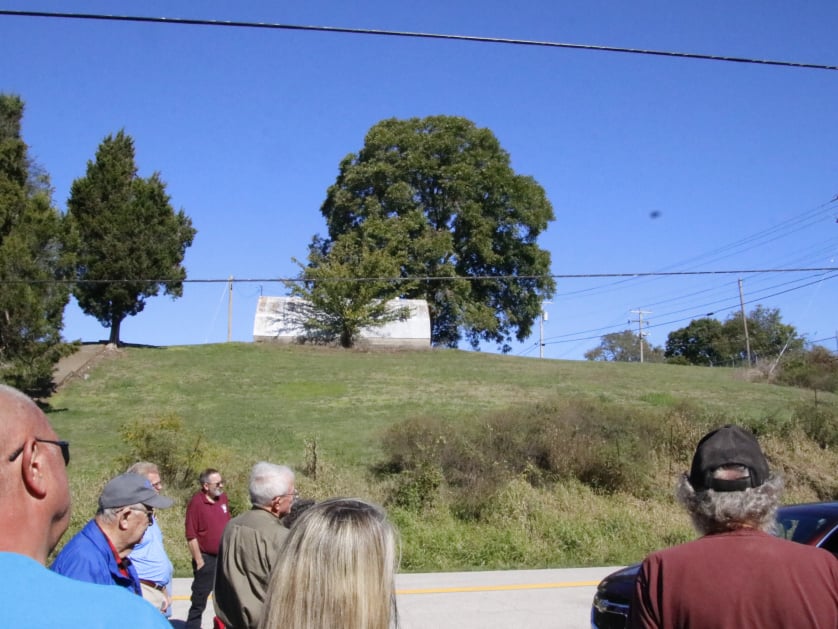
Tour Stop #2 was the frontage of Camp Calhoun. Near the end of September several Indiana Infantry regiments arrived at the "camp at Calhoun" bringing the total number of men to more than 5,000. By late January, Camp Calhoun housed between 10,000 and 15,00 men. In contrast the civilian population was little more than 500.
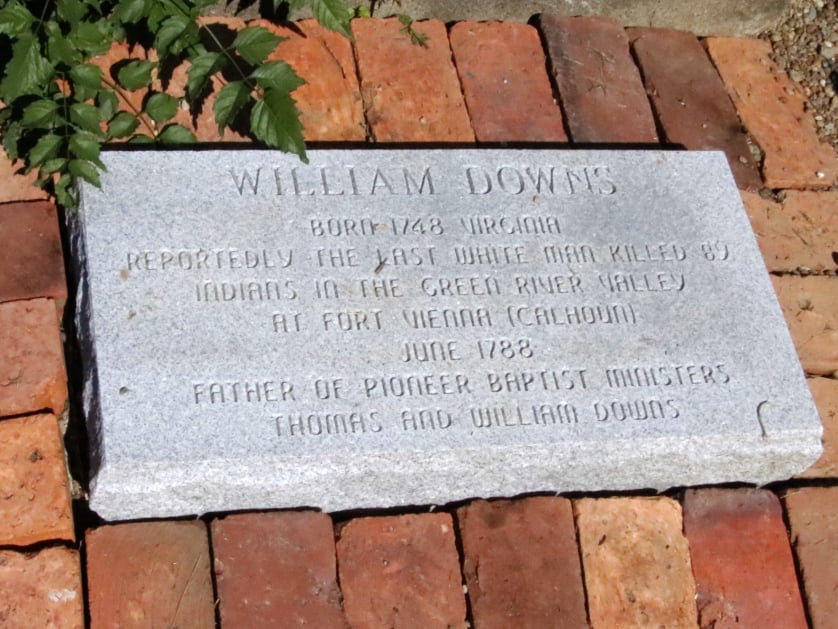
This area was also the site of Fort Vienna before the Revolutionary War. In addition to Camp Calhoun just along the road is a stone commemorating the last settler killed by Indians in the area.
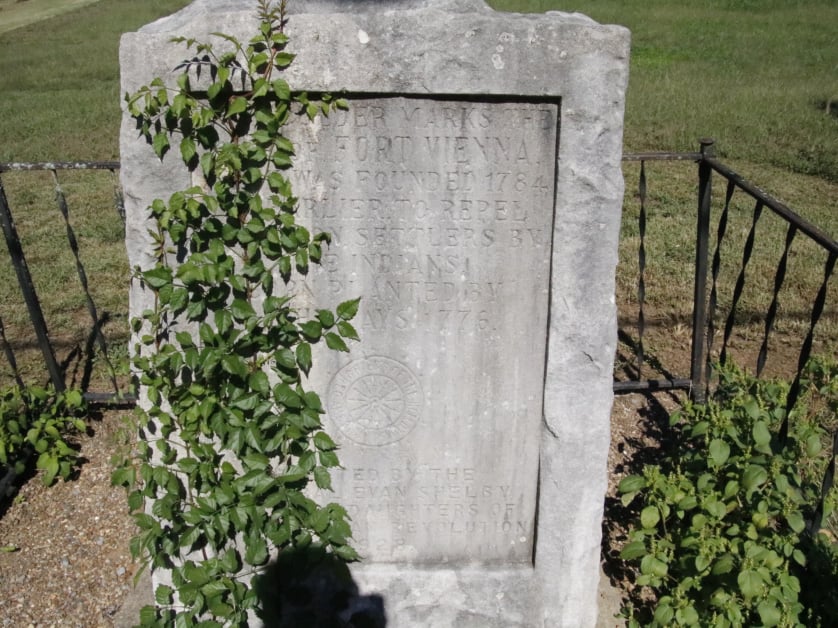
Also a DAR (Daughters of the American Revolution) monument to Fort Vienna.
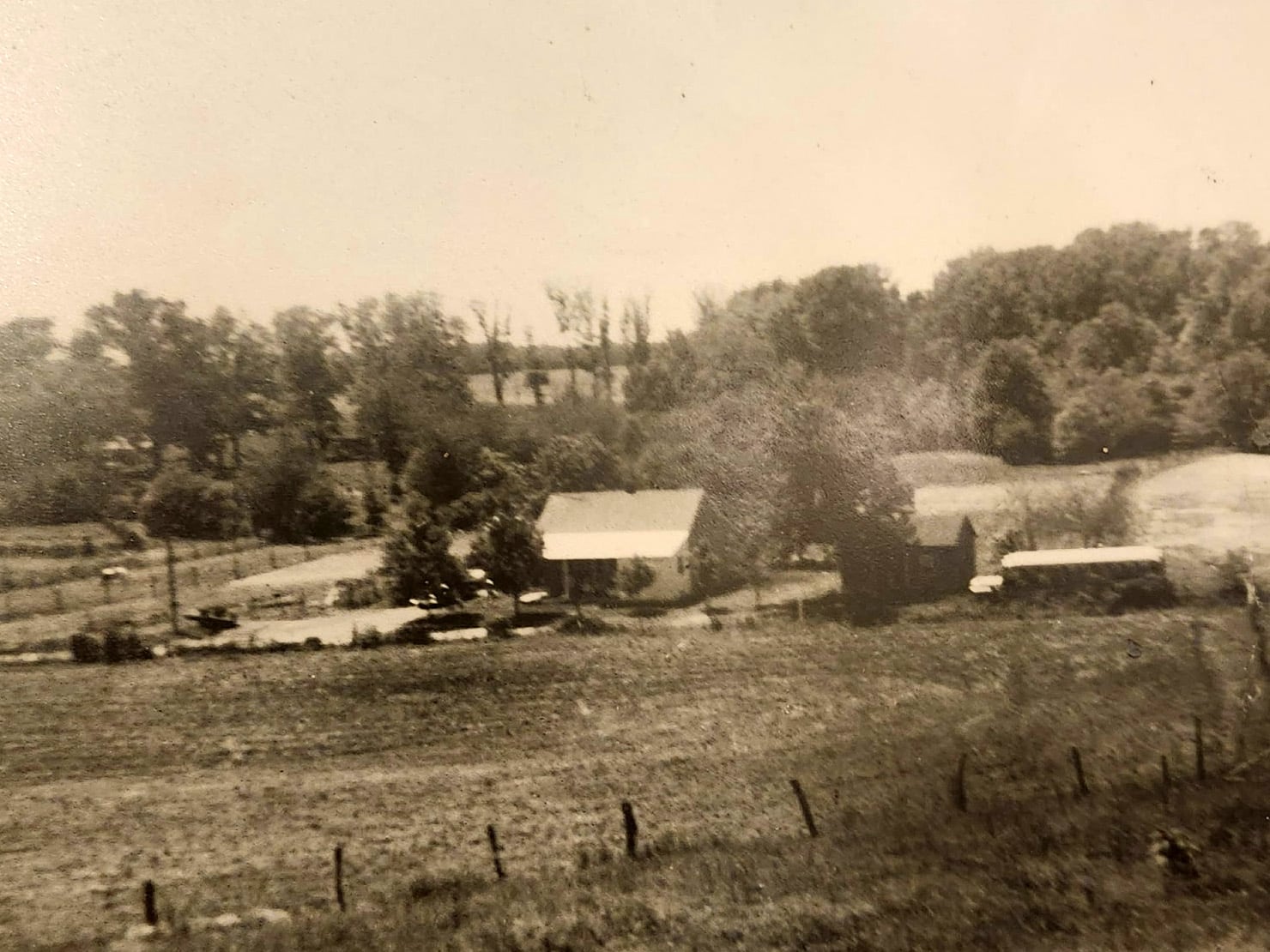
It was also the childhood home of author Don Wilson in 1958. It was located at the bottom of the hill, below the cannon battery.
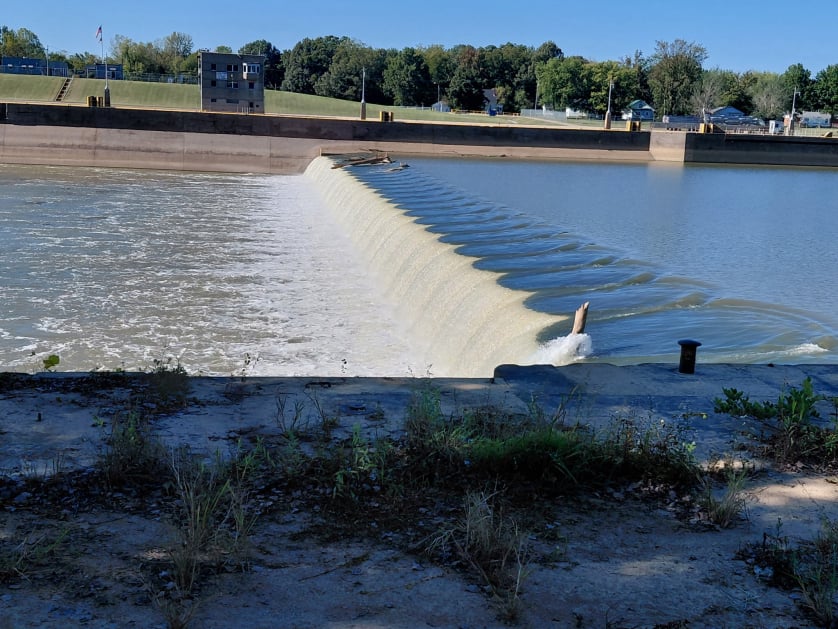
Tour Stop #3 was at the Locks on the Green River. The Confederate forces occupied Bowling Green on September 18, 1861. Young men eager to support the Union cause and filled with thoughts of adventure joined House Guard units across Kentucky. Before the end of the month 2,000 men recruited in McLean and neighboring counties arrived in Calhoun to defend Green River Lock No. 2.
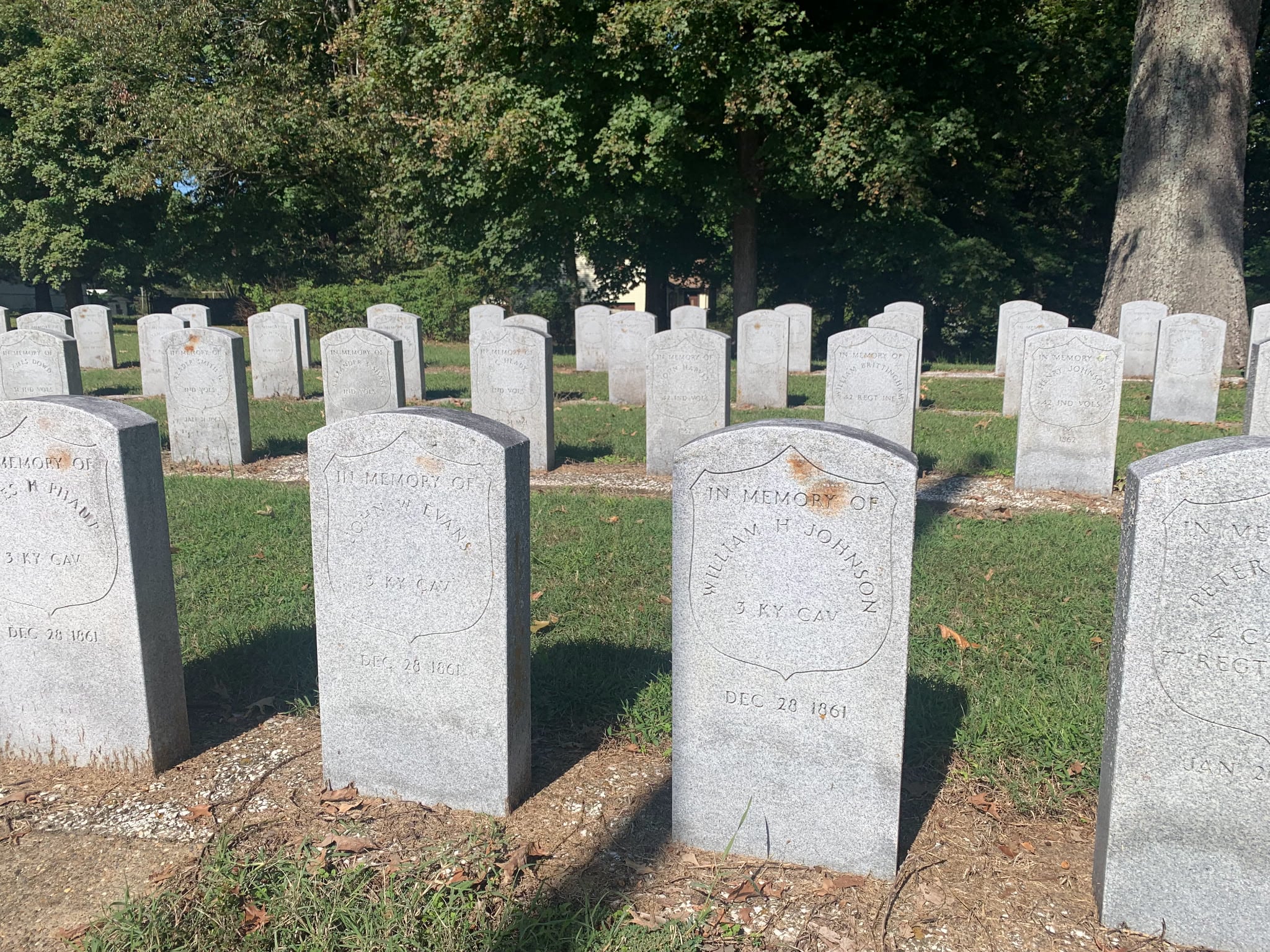
Tour Stop #4 Was at the Union Cemetery. Over 600 Union Soldiers that died of disease are buried here. Thirteen Union soldiers that died at the Battle of Sacramento are buried in the front row.
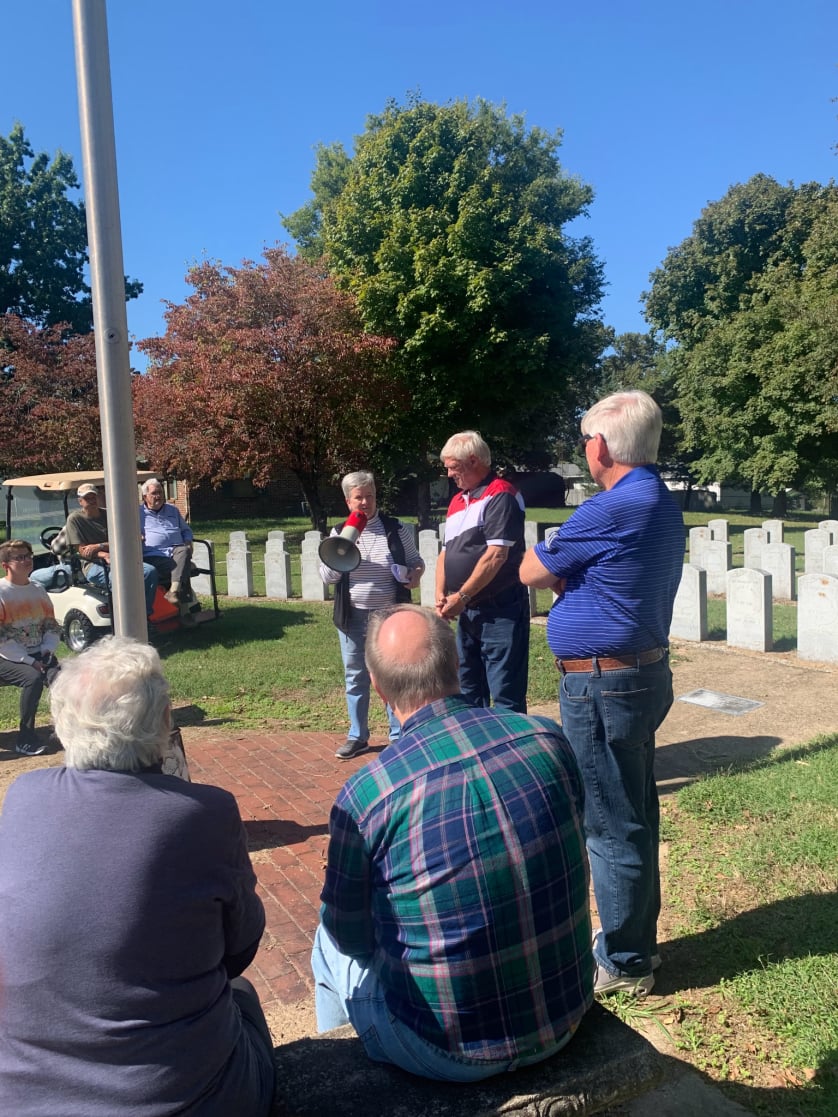
Harold Wilson talked about his brother Don's dedication to the site. After the city cleared the brush, Don led the construction of the cemetery. He set 140 tombstones before his death.
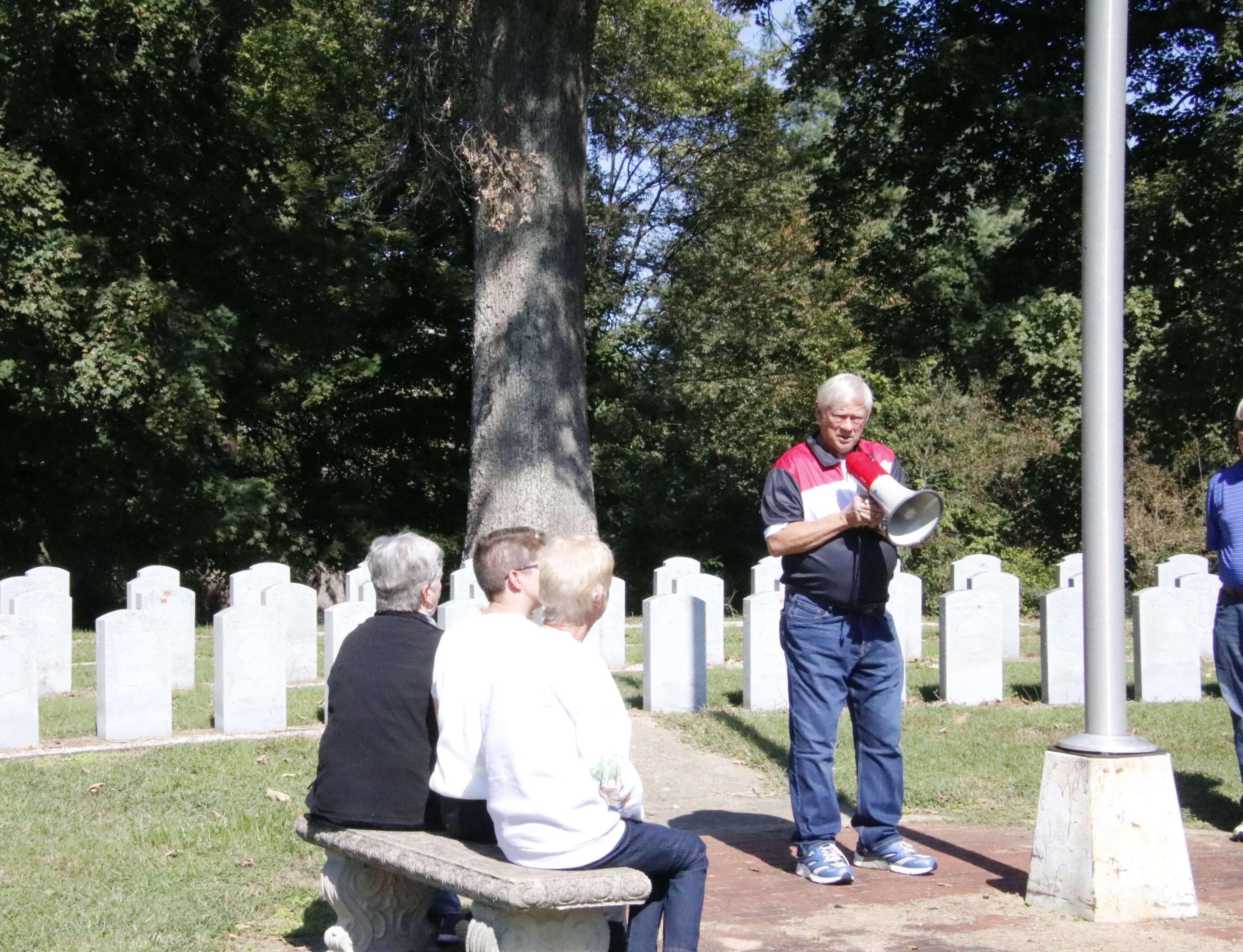
Telling the story of building the cemetery.
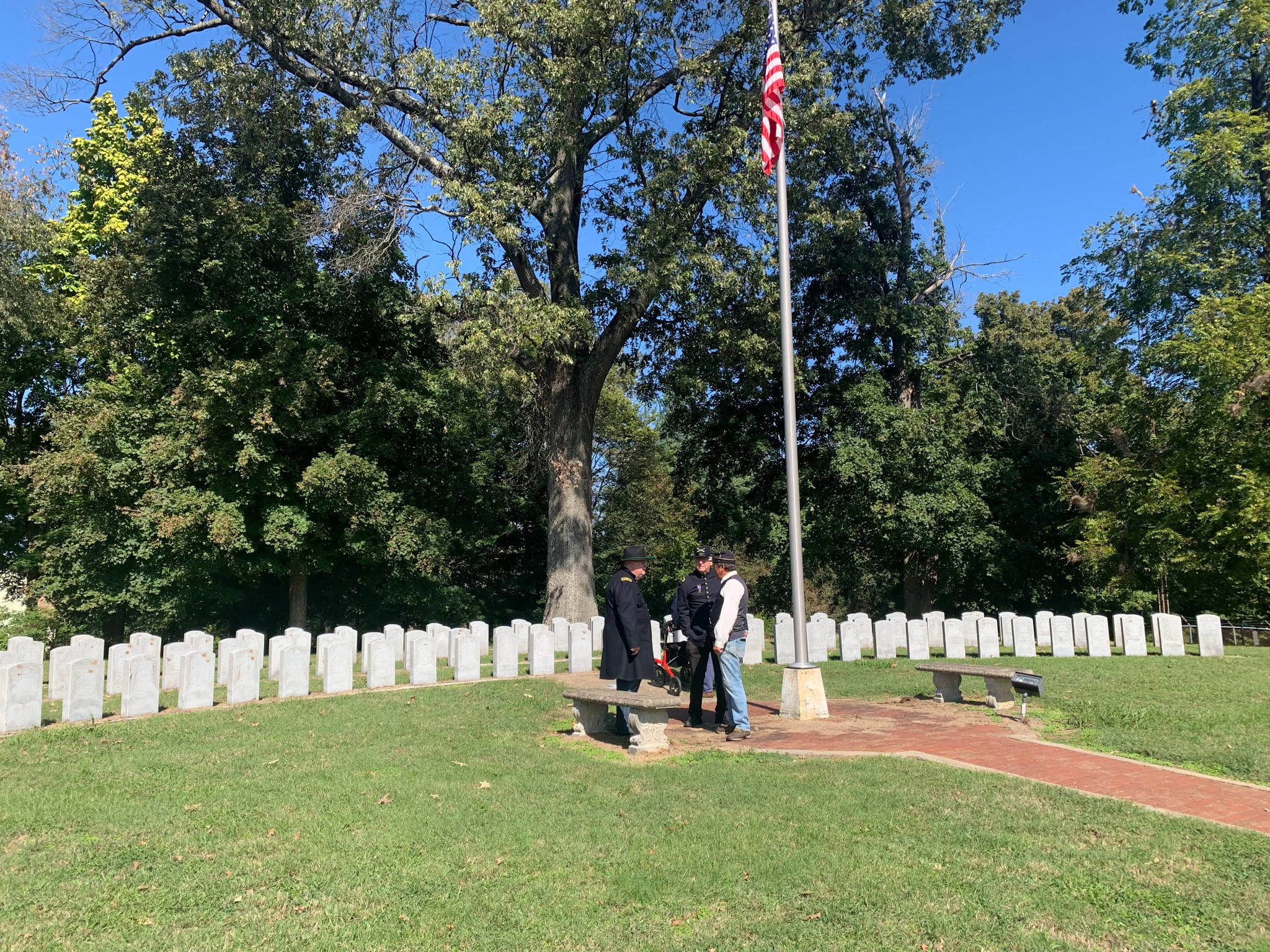
Sons of the Union gathered to remember the fallen.
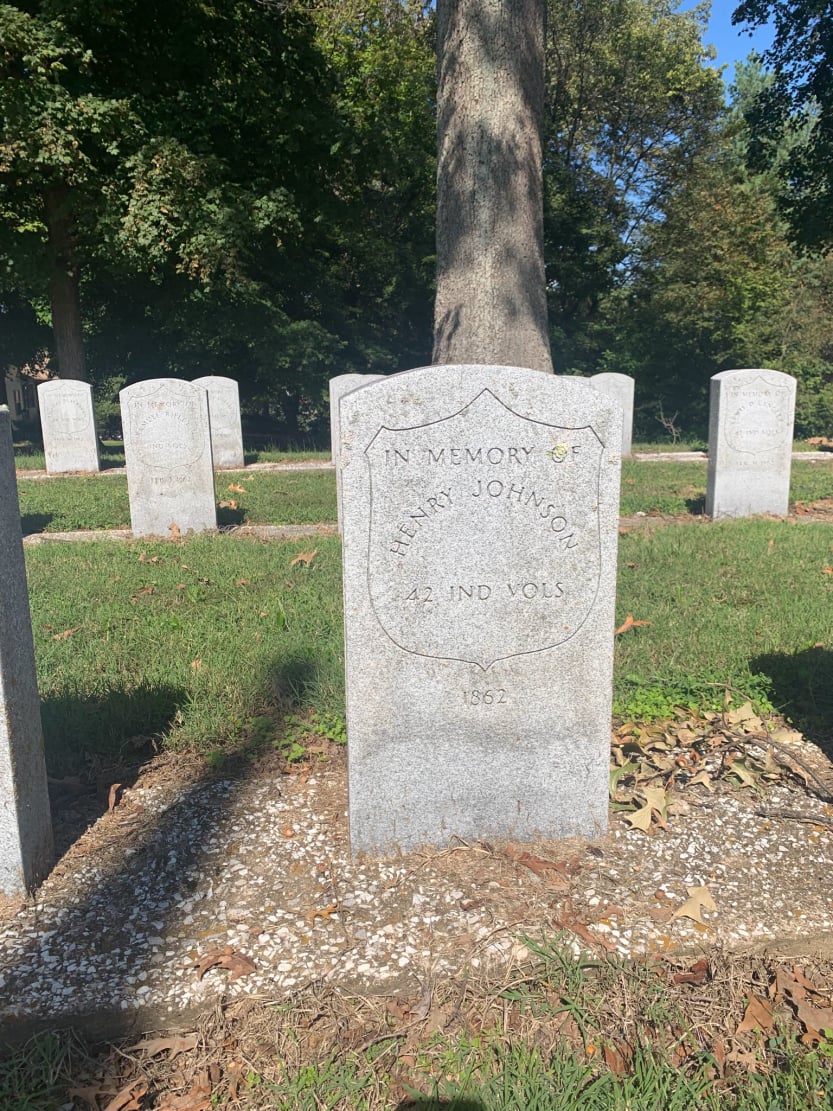
There are another 460 stones left to set. Hopefully the publication of the book will encourage a new movement to finish the cemetery.
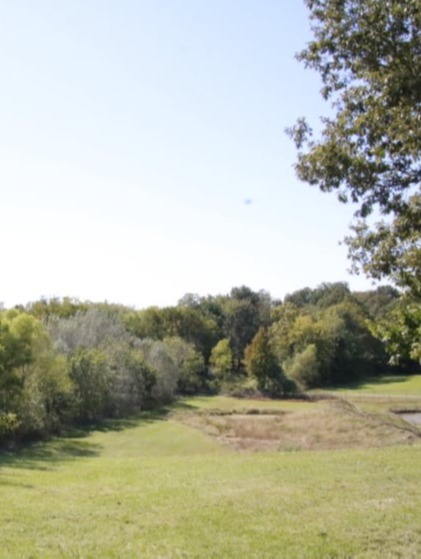
Tour Stop #5 was at the top of the hill. From the soldiers vantage point they could see all the way to the river.
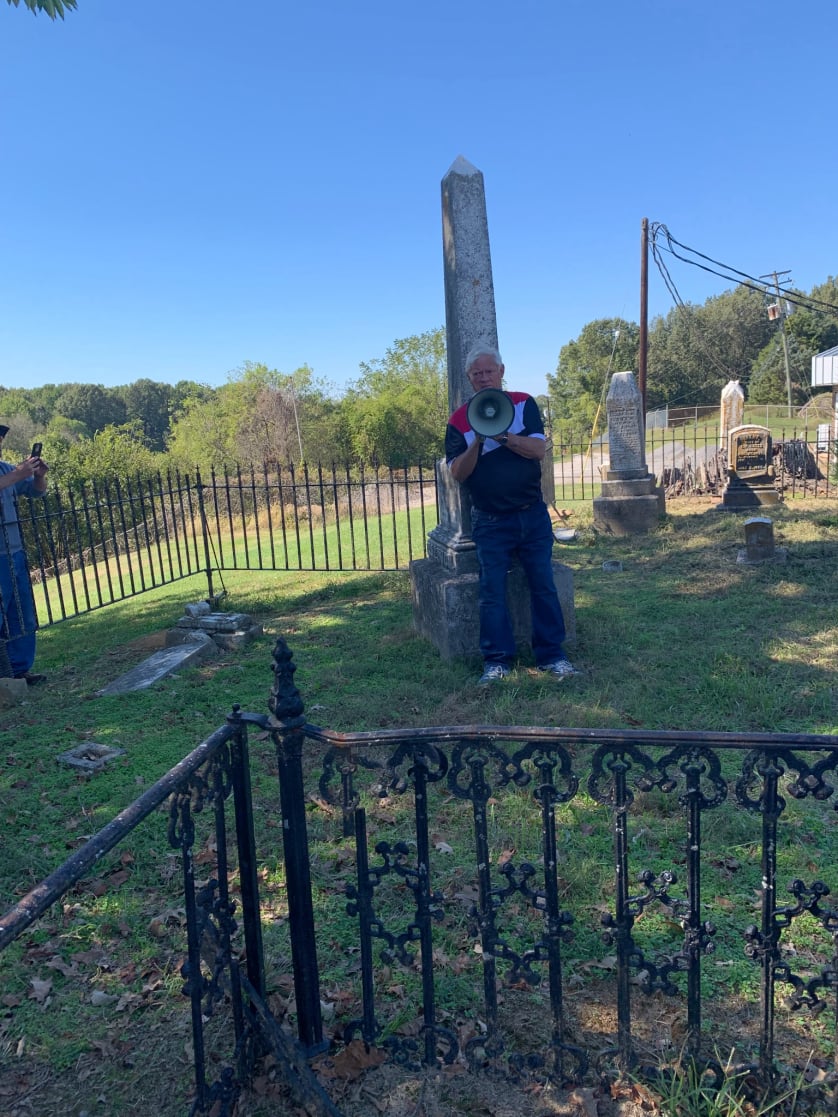
In addition to viewing the site from above there is a family cemetery. It is the John C. Calhoon Cemetery. Calhoun was named for him. Over the course of time the spelling was changed to Calhoun.
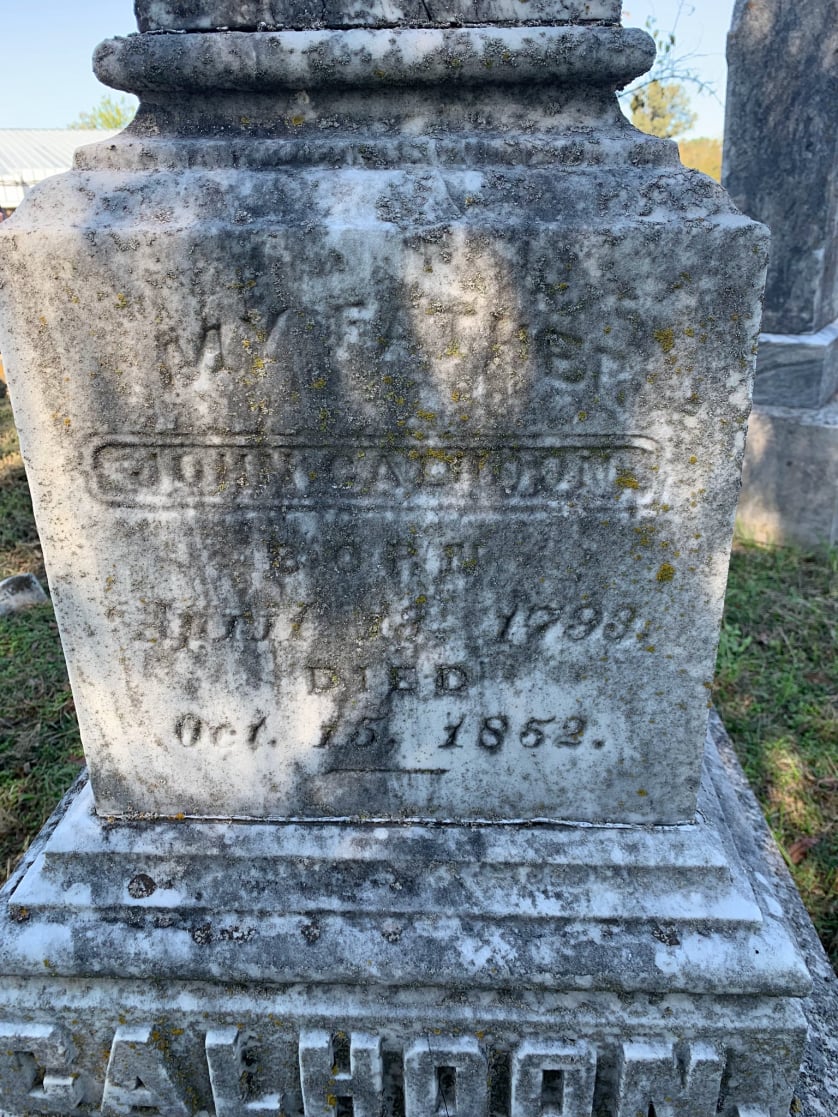
A John Calhoon's tombstone in the Calhoun Family Cemetery.
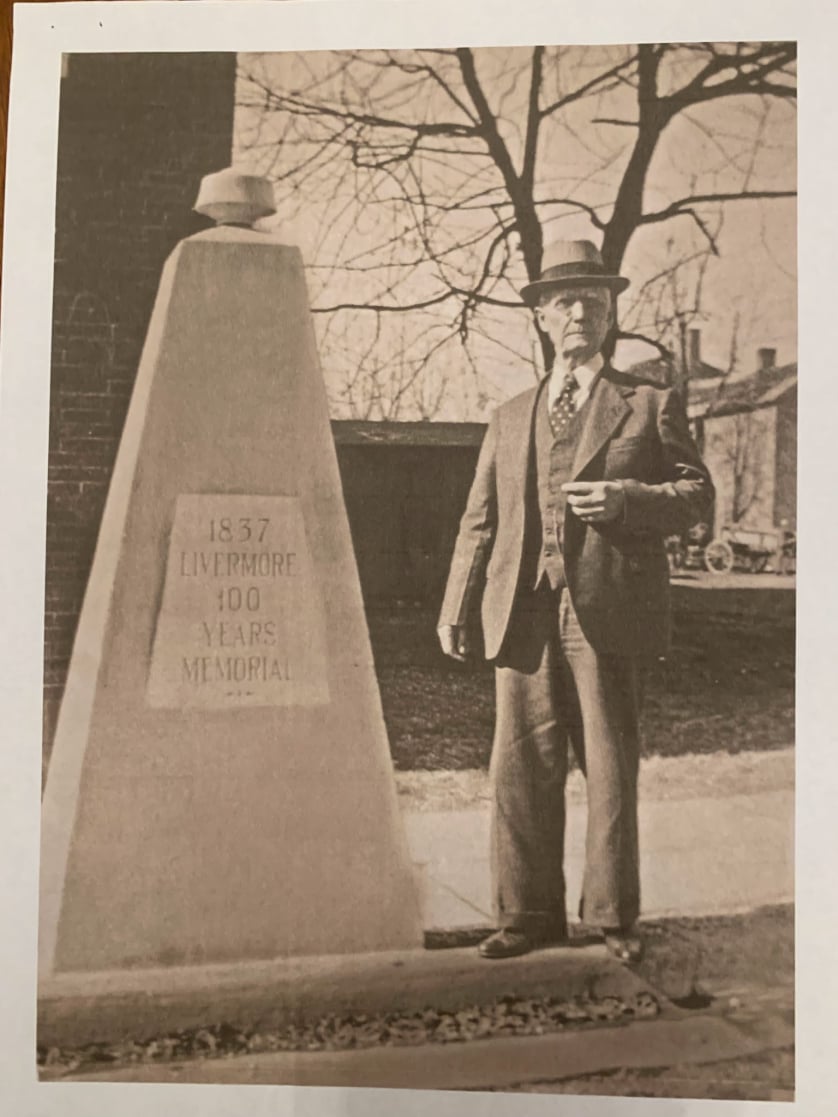
An old photo of James Henry Livermore. The City of Livermore was names after him.
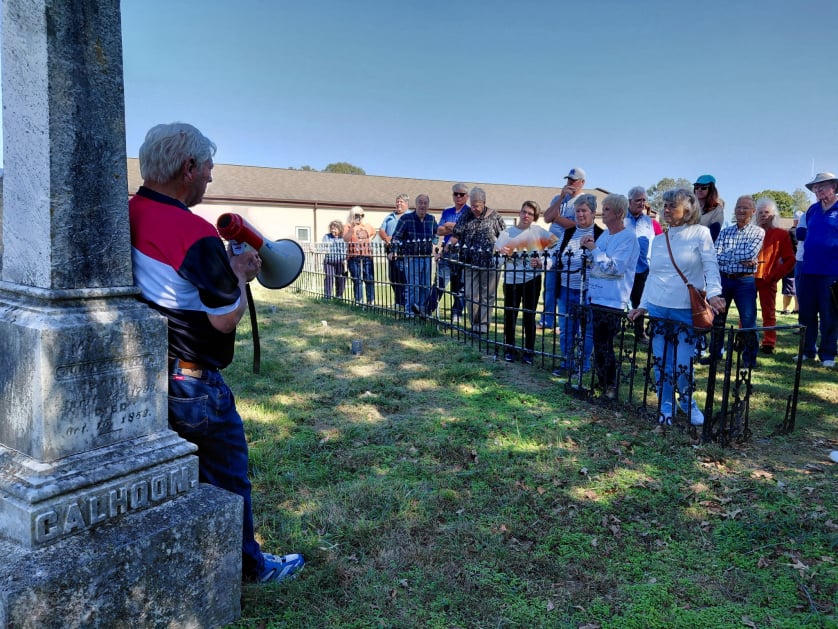
The Calhoun Family Cemetery.
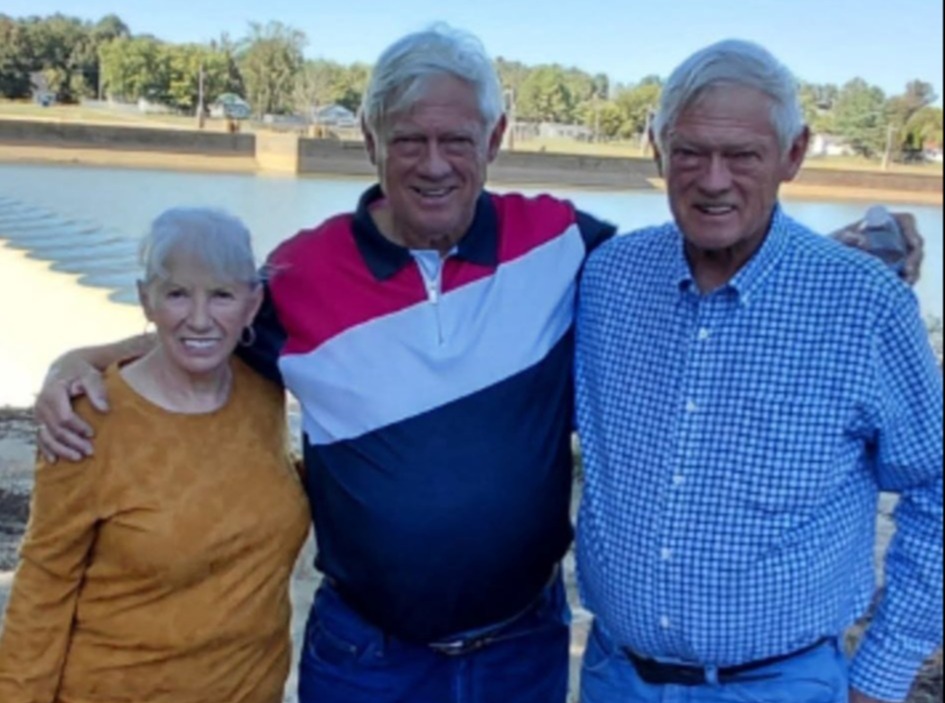
Don Wilson's siblings on the tour. Joyce Parson, Harold & Darrell Wilson. (Missing Benita Troutman).
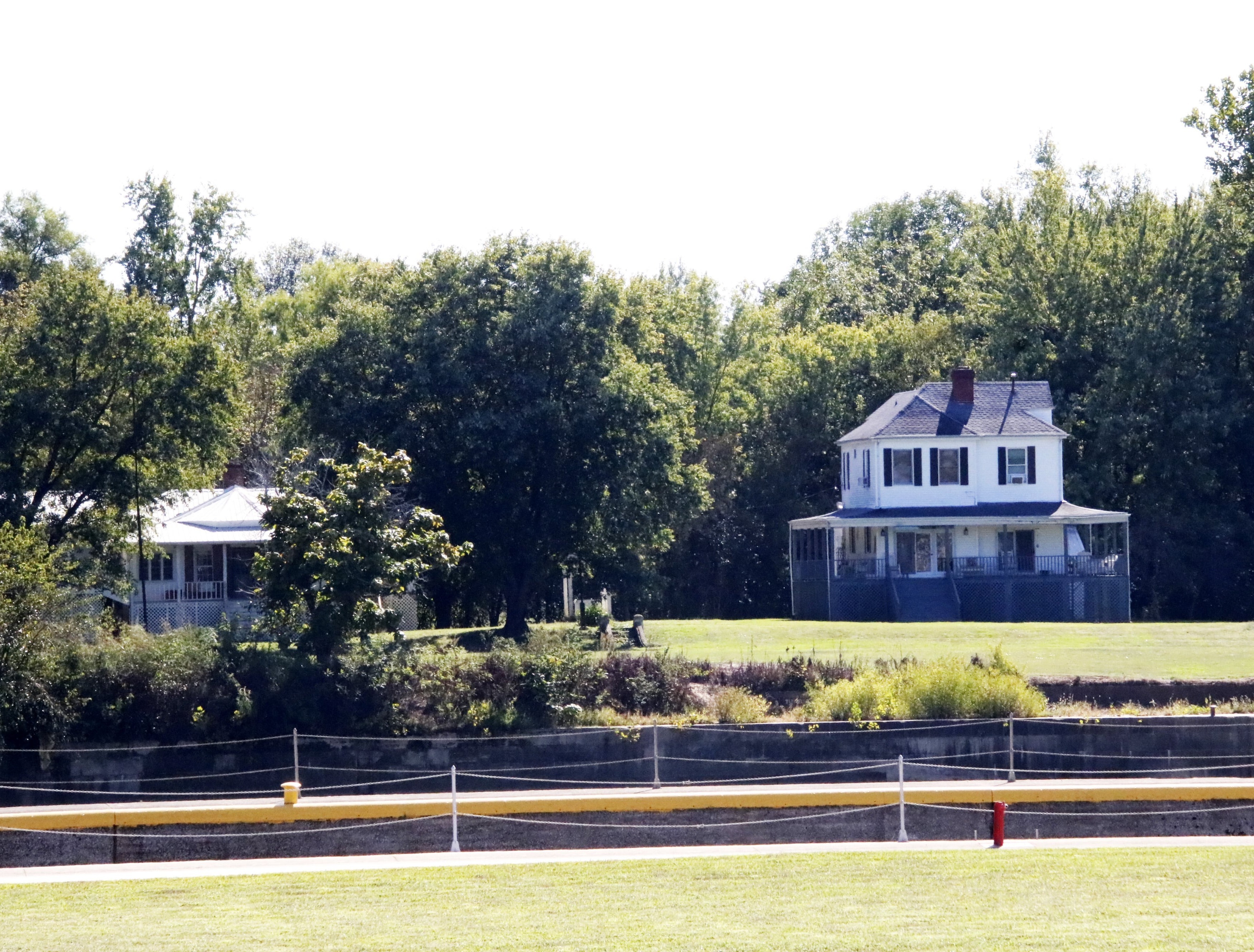
The lockmaster's home across the river.
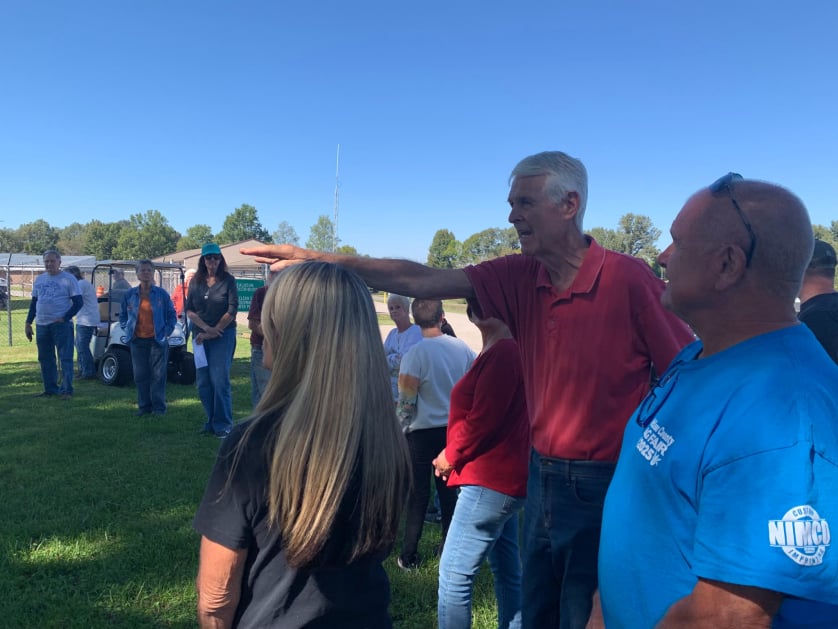
Dr. Hugh Wilhite talks about the Lockmaster's house across the dam.
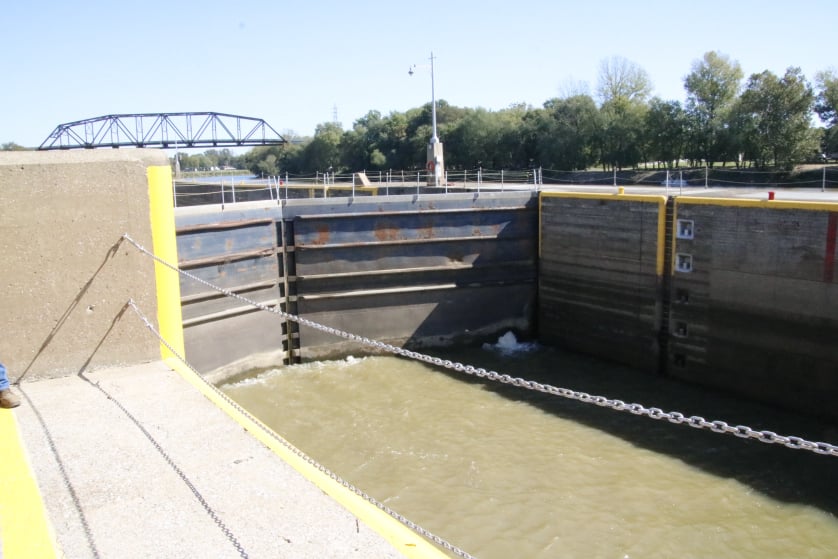
Another view of the dam built in 1954.
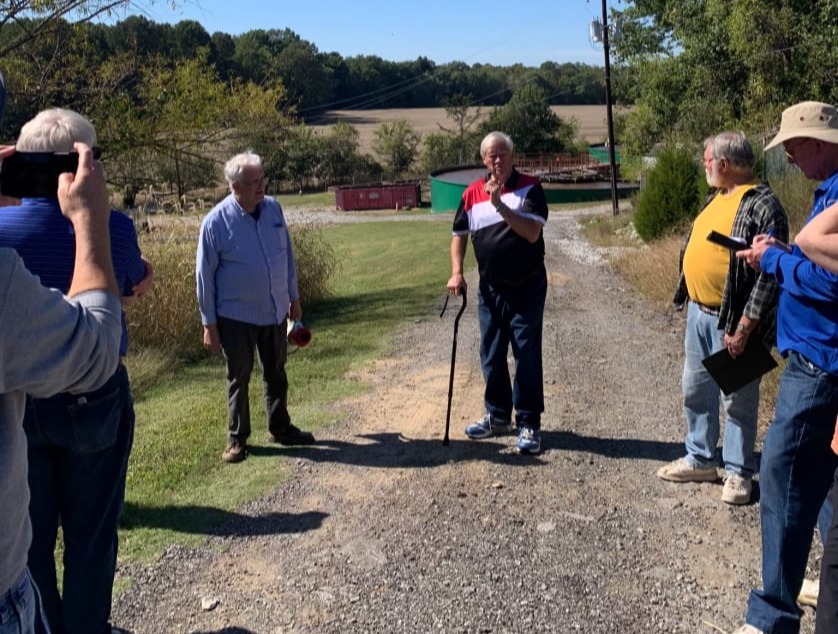
Harold Wilson showing the Calvary parade training ground now the Riggs farm.
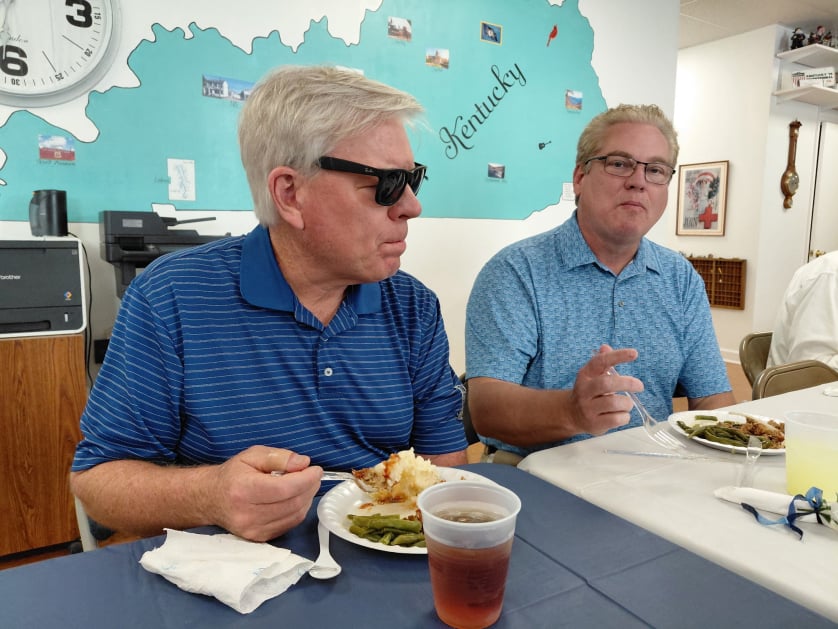
Don Wilson's sons: William Wayne Wilson and Michael Wilson at the luncheon after the tour. Lunch was sponsored by the museum.
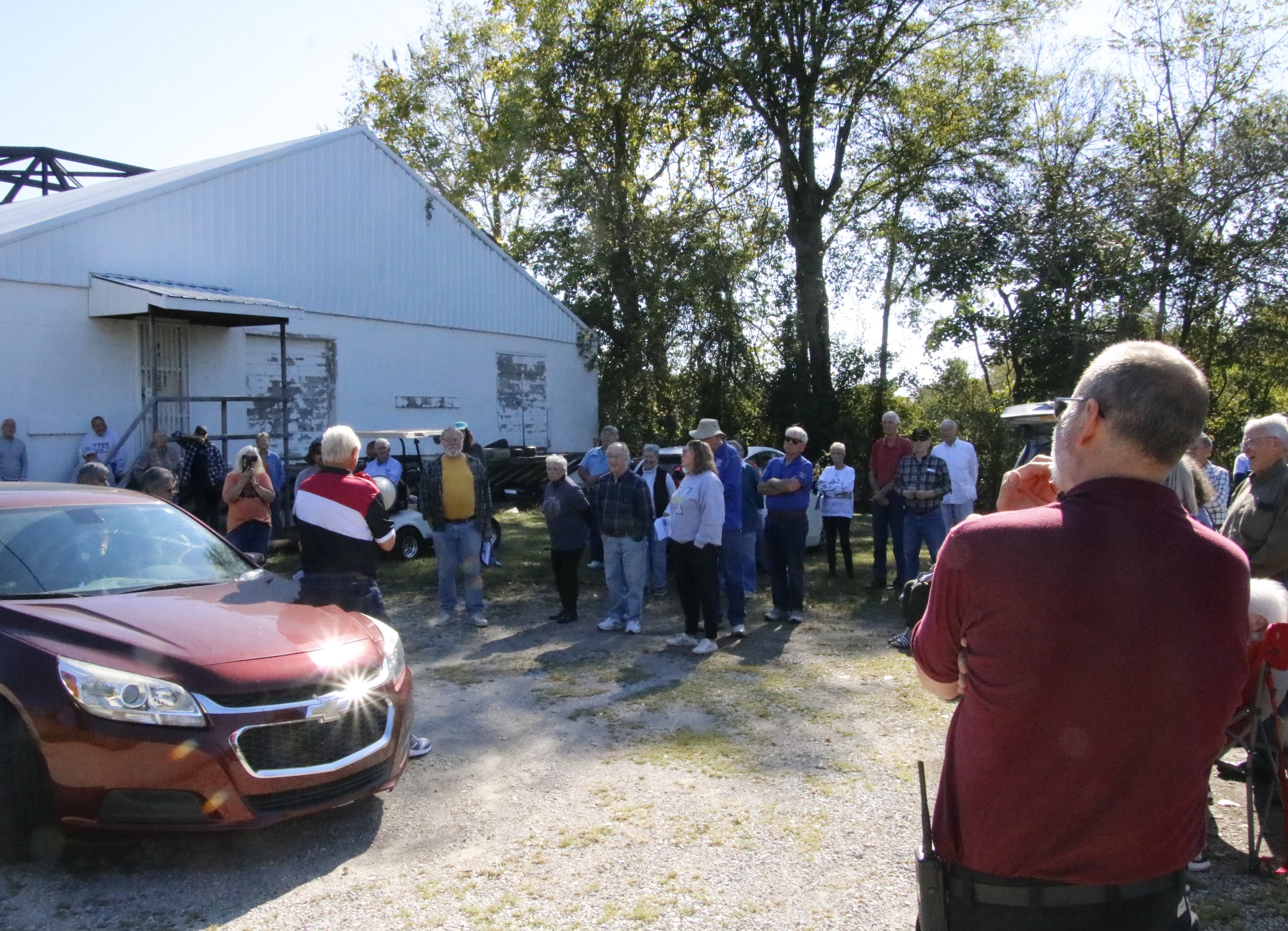
A good view of all of the attendees on the tour.
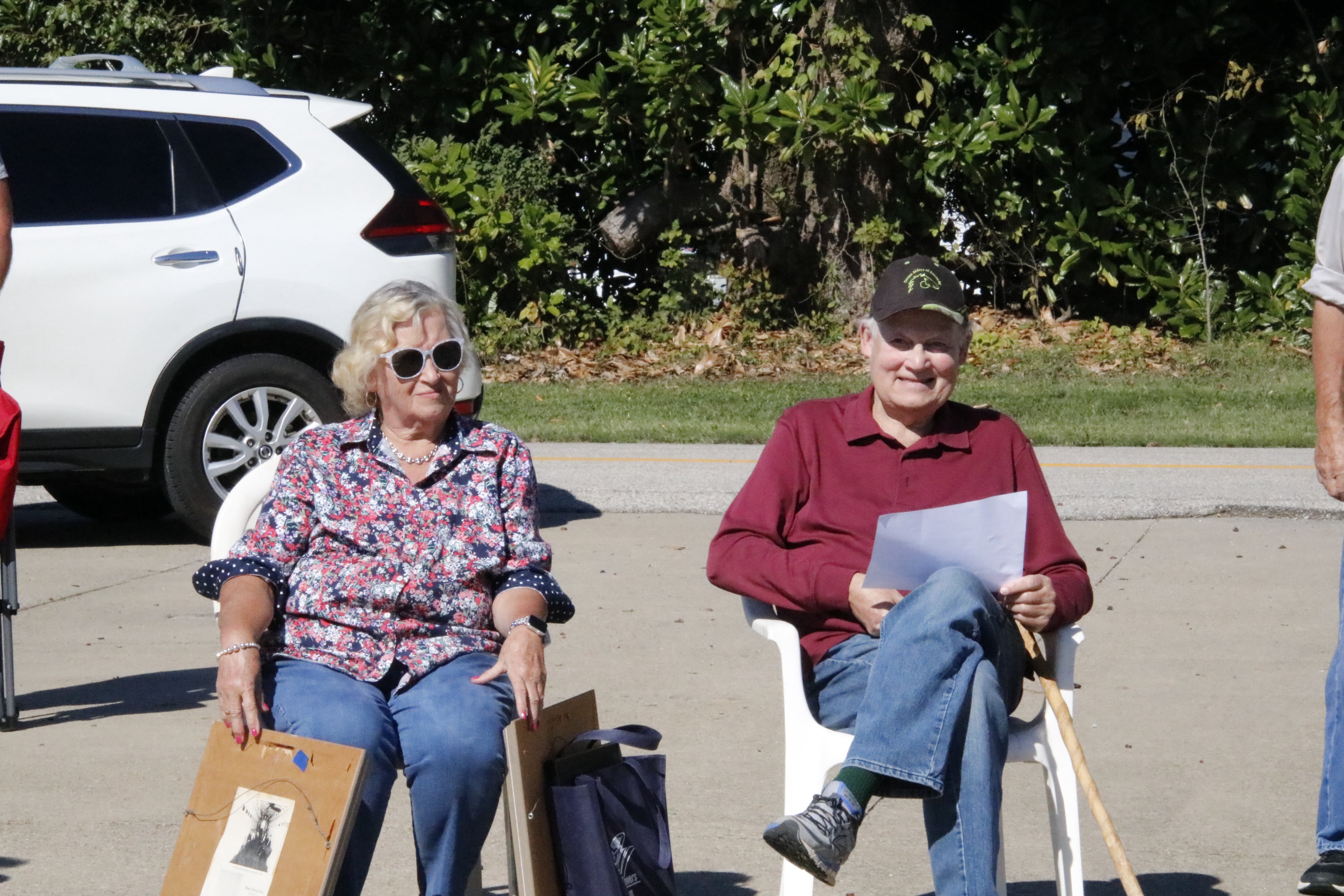
Craig Nall and sister Millie Clark tell the story of their dad and uncle who used their dragline to build the locks and dam on the Calhoun side.
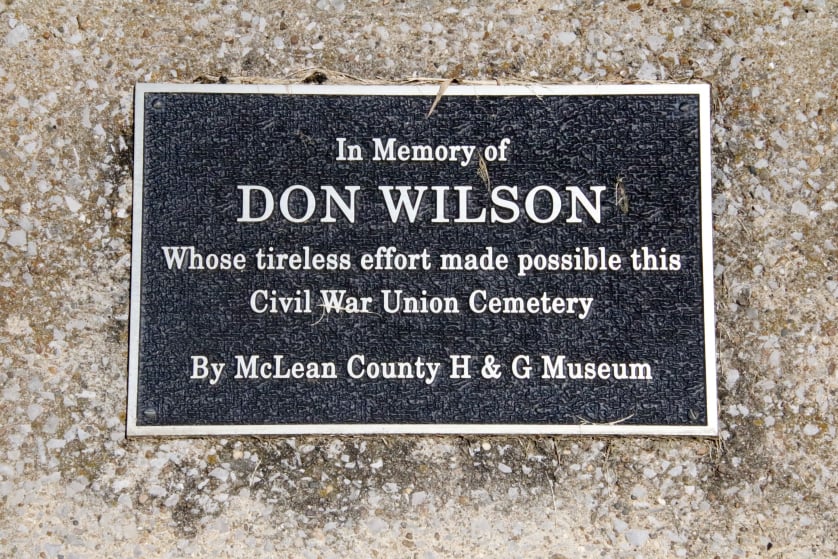
Commemorative plaque near the cemetery.
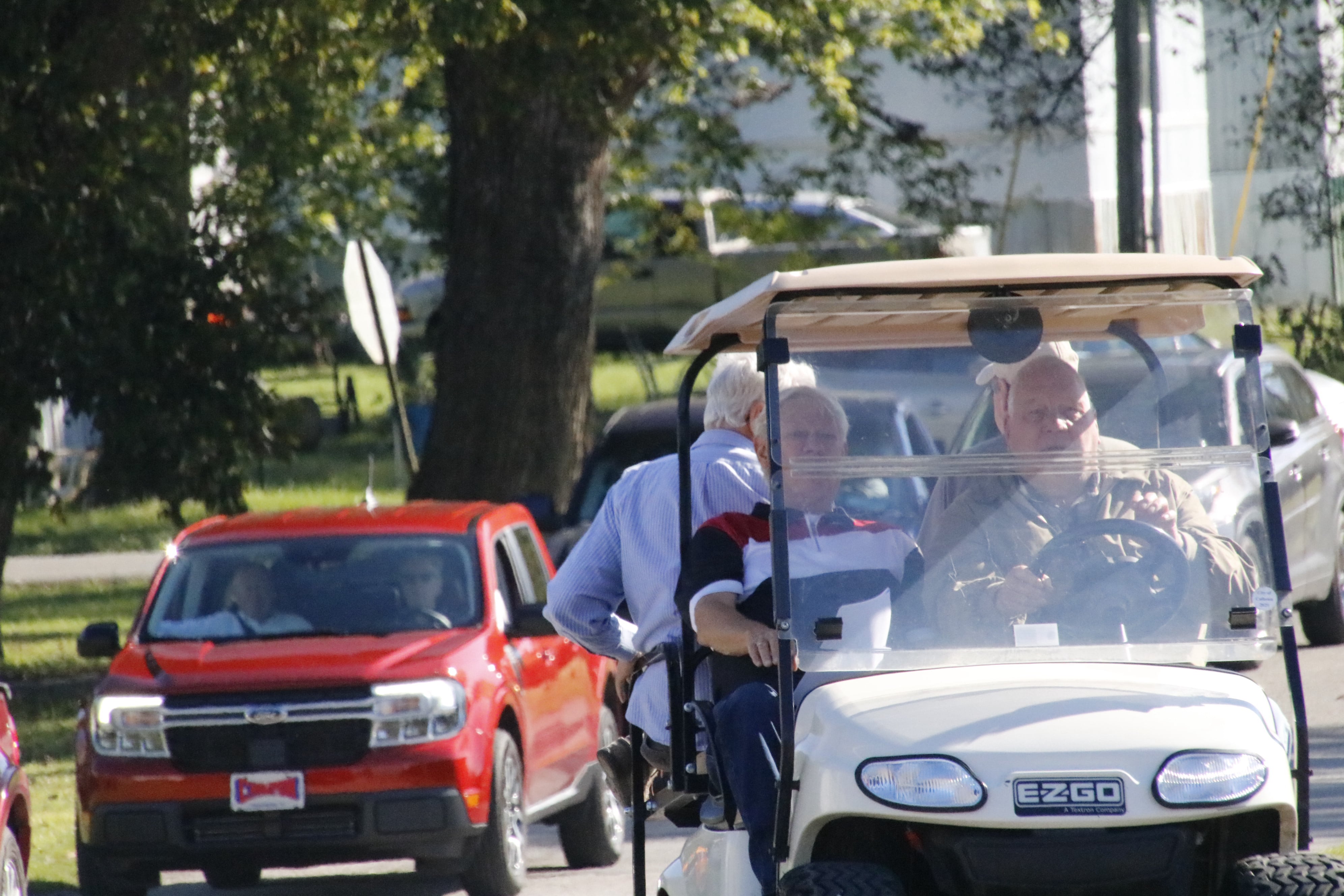
Leading the tour in a golf cart.
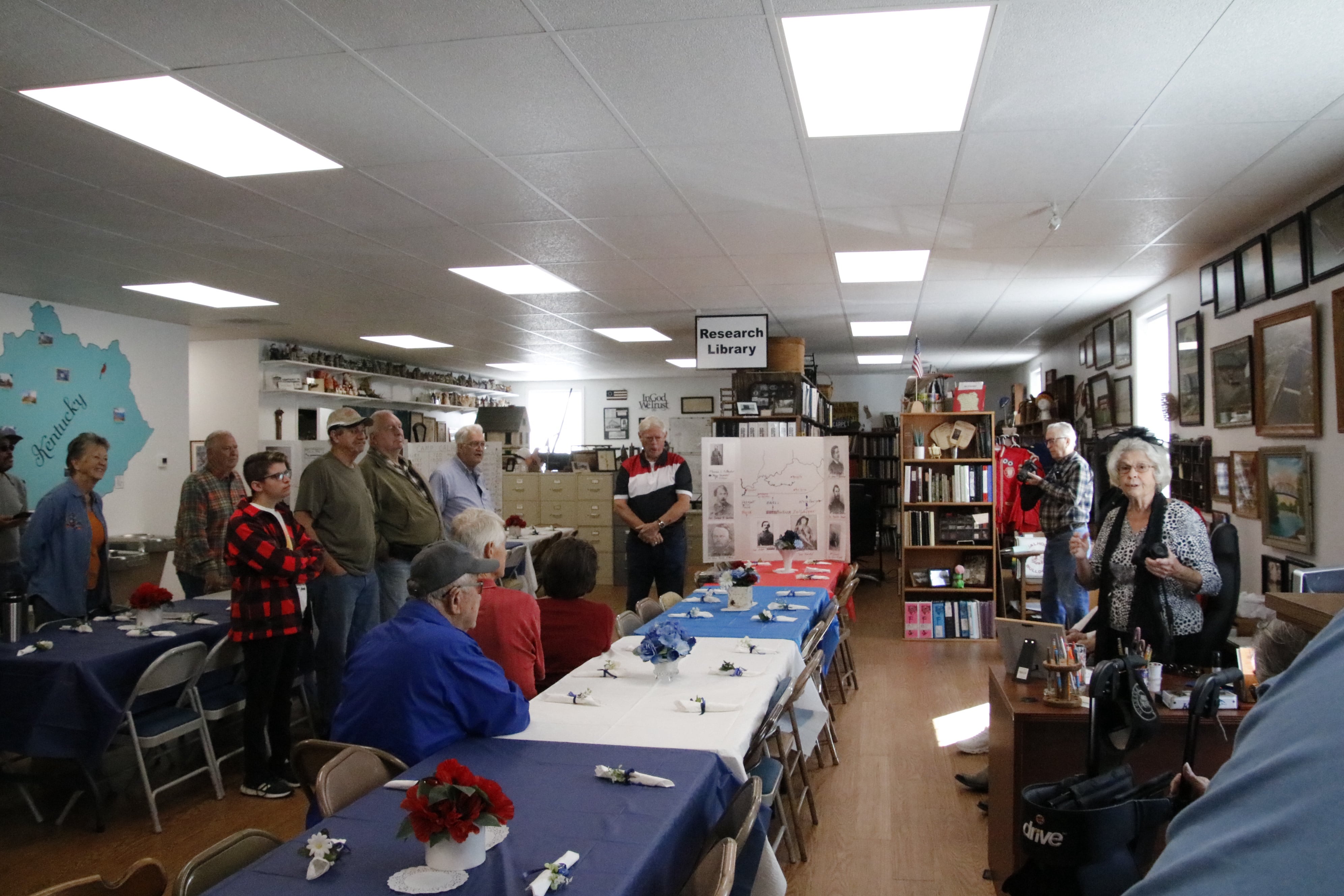
At the museum.